




Advertisements
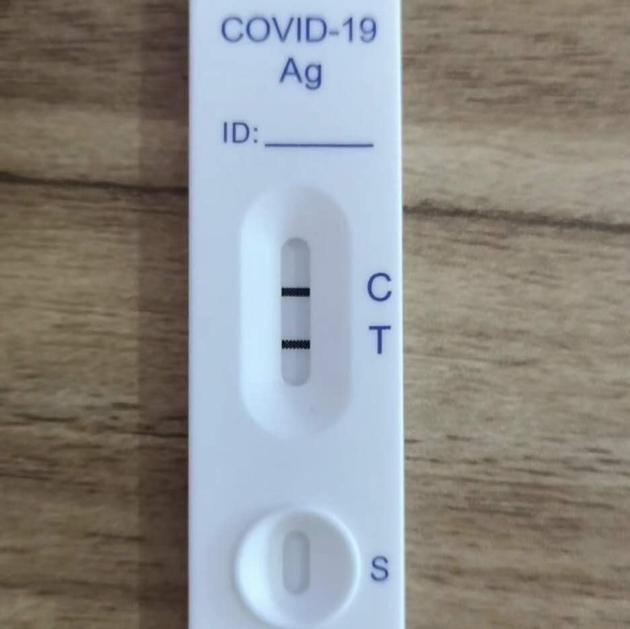


COVID-19 Antigen Rapid Test Cassette
| Price: | US$ 2.5 / Piece |
|---|---|
| Minimum Order: | 10000 |
| Payment Terms: | T/T |
| Port of Export: | Ningbo |
Product Details
| Model No.: | Antigen | Brand Name: | Astock |
|---|
| Certification: | iso/ce |
|---|---|
| Specification: | The COVID-19 Antigen Rapid Test Cassette is a lateral flow immunoassay intended for the qualitative detection SARS-CoV-2 nucleocapsid antigens in nasopharyngeal swab and oropharyngeal swab from individuals who are suspected of COVID-19 by their healthcare provider. |
Packaging & Delivery
| Packaging: | Carton |
|---|---|
| Delivery/Lead Time: | |
| Production Capacity: |
Product Description
Results are for the identification of SARS-CoV-2 nucleocapsid antigen. Antigen is generally detectable in nasopharyngeal swab and oropharyngeal swab during the acute phase of infection. Positive results indicate the presence of viral antigens, but clinical correlation with patient history and other diagnostic information is necessary to determine infection status. Positive results do not rule out bacterial infection or co-infection with other viruses. The agent detected may not be the definite cause ofdisease. Negative results do not rule out SARS-CoV-2 infection and should not be used as the sole basis for treatment or patient management decisions, including infection control decisions. Negative results should be considered in the context of a patient’s recent exposures, history and the presence of clinical signs and symptoms consistent with COVID-19, and confirmed with a molecular assay, if necessary for patient management. The COVID-19 Antigen Rapid Test Cassette is intended for use by trained clinical laboratory personnel specifically instructed and trained in vitro diagnostic procedures. [SUMMARY] The novel coronaviruses (SARS-CoV-2) belong to the β genus. COVID-19 is an acute respiratory infectious disease. People are generally susceptible. Currently, the patients infected by the novel coronavirus are the main source of infection; asymptomatic infected people can also be an infectious source. Based on the current epidemiological investigation, the incubation period is 1 to 14 days, mostly 3 to 7 days. The main manifestations include fever, fatigue and dry cough. Nasal congestion, runny nose, sore throat, myalgia and diarrhea are found in a few cases. [PRINCIPLE] COVID-19 Antigen Rapid Test Cassette is an immunoassay based on the principle of the double antibody-sandwich technique. The COVID-19 Antigen Rapid Test Cassette is designed to detect nucleocapsid antigen from the SARS-CoV-2 in nasopharyngeal swab and oropharyngeal swab, from patients who are suspected of COVID-19 by their healthcare provider. During testing, a specimen migrates upward by capillary action. The SARS-CoV-2 antigens if present in the specimen will bind to the antibody conjugates. The immune complex is then captured on the membrane by the pre-coated SARS-Co-2 nuclenocapsid protein monoclonal antibody, and a visible colored line will show up in the test line region indicating a positive result. In the absence of SARS-CoV-2 antigens, a colored line will not form in the test line region indicating a negative result. To serve as a procedural control, a colored line will always appear at the control line region, indicating that proper volume of specimen has been added and membrane wicking has occurred. [WARNINGS AND PRECAUTIONS] For in vitro diagnostic use only. For healthcare professionals and professionals at point of caresites. Do not use this product as the sole basis to diagnose or exclude SARS-CoV-2 infection or to inform infection status of COVID-19. Do not use after the expiration date. Please read all the information in this leaflet before performing the test. The test cassette should remain in the sealed pouch until use. All specimens should be considered potentially hazardous and handled in the same manner as an infectious agent. The used test cassette should be discarded according to federal, state and local regulations. [COMPOSITION] The test cassette contains a membrane strip coated with anti-SARS-CoV-2 nuclenocapsid protein monoclonal antibody on the T test line, and a dye pad which contains colloidal gold coupled with SARS-CoV-2 nuclenocapsid protein monoclonal antibody. The quantity of tests was printed on thelabeling. Materials Provided Test Cassette Extraction Tube Sterilized Swab Dropper Tip Extraction Reagent Work Station Package Insert Materials Required But Not Provided Timer [STORAGE AND STABILITY] Store as packaged in the sealed pouch at temperature (4-30℃ or 40- 86℉). The kit is stable within the expiration date printed on the labeling. Once open the pouch, the test should be used within one hour. Prolonged exposure to hot and humid environment will cause product deterioration. The LOT and the expiration date were printed on the labeling. [SPECIMEN] Specimens obtained early during symptom onset will contain the highest viral titers; specimens obtained after five days of symptoms are more likely to produce negative results when compared to an RT-PCR assay. Inadequate specimen collection, improper specimen handling and/or transport may yield a falsely negative result; therefore, training in specimen collection is highly recommended due to the importance of specimen quality for generating accurate test results. Sample Collection Nasopharyngeal Swab Sample Insert minitip swab with a flexible shaft (wire or plastic) through the nostril parallel to the palate (not upwards) until resistance is encountered or the distance is equivalent to that from the ear to the nostril of the patient, indicating contact with the nasopharynx. Swab should reach depth equal to distance from nostrils to outer opening of the ear. Gently rub and roll the swab. Leave swab in place for several seconds to absorb secretions. Slowly remove swab while rotating it. Specimens can be collected from both sides using the same swab, but it is not necessary to collect specimens from both sides if the minitip is saturated with fluid from the first collection. If a deviated septum or blockage creates difficulty in obtaining the specimen from one nostril, use the same swab to obtain the specimen from the othernostril.Oropharyngeal Swab Sample Insert swab into the posterior pharynx and tonsillar areas. Rub swab over both tonsillar pillars and posterior oropharynx and avoid touching the tongue, teeth, and gums.Sample Preparation After Swab specimens were collected, swab can be stored in extraction reagent provided with the kit. Also can be stored by immersing the swab head in a tube containing 2 to 3 mL of virus preservation solution (or isotonic saline solution, tissue culture solution, or phosphate buffer). Sample Transport and Storage Freshly collected specimens should be processed as soon as possible, but no later than one hour after specimen collection. Specimen collected may be stored at 2-8℃ for no more than 24 hours; Store at -70 ℃ for a long time, but avoid repeated freeze-thaw cycles. [SPECIMEN PREPARATION] 1. Unscrew the lid of an extraction reagent. Add all of the specimen extraction reagent into an extraction tube, and put it on the work station. 2. Insert the swab sample into the extraction tube which contains extraction reagent. Roll the swab at least 5 times while pressing the head against the bottom and side of the extraction tube. Leave the swab in the extraction tube for one minute. 3. Remove the swab while squeezing the sides of the tube to extract the liquid from the swab. The extracted solution will be used as test specimen. 4. Insert a dropper tip into the extraction tube tightly.(The picture is for references only, please refer to the material object.) [TEST PROCEDURE] Allow the test device and specimens to equilibrate to temperature (15-30℃ or 59-86℉) prior to testing. 1. Remove the test cassette from the sealed pouch.2. Reverse the specimen extraction tube, holding the specimen extraction tube upright, transfer 3 drops (approximately 100μL) to the specimen well(S) of the test cassette, then start the timer. See illustrationbelow. 3. Wait for colored lines to appear. Interpret the test results at 15 minutes. Do not read results after 20 minutes.[INTERPRETATION OF RESULTS] Positive:*Two lines appear. One colored line should be in the control region (C), and another apparent colored line adjacent should be in the test region (T). Positive for the presence of SARS-CoV-2 nucleocapsid antigen. Positive results indicate the presence of viral antigens but clinical correlation with patient history and other diagnostic information is necessary to determine infection status Positive results do not rule out bacterial infection or co-infection with other viruses. The agent detected may not be the definite cause of disease. Negative: One colored line appears in the control region (C). No line appears in the test region (T). Negative results are presumptive. Negative test results do not preclude infection and should not be used as the sole basis for treatment or other patient management decisions, includinginfection control decisions, particularly in the presence of clinical signs and symptoms consistent with COVID-19, or in those who have been in contact with the virus. It is recommended that these results be confirmed by a molecular testing method, if necessary, for patient management. Invalid: Control line fails to appear. Insufficient specimen volume or incorrect procedural techniques are the most likely reasons for control line failure. Review the procedure and repeat the test using a new test cassette. If the problem persists, discontinue using the lot immediately and contact your local distributor.
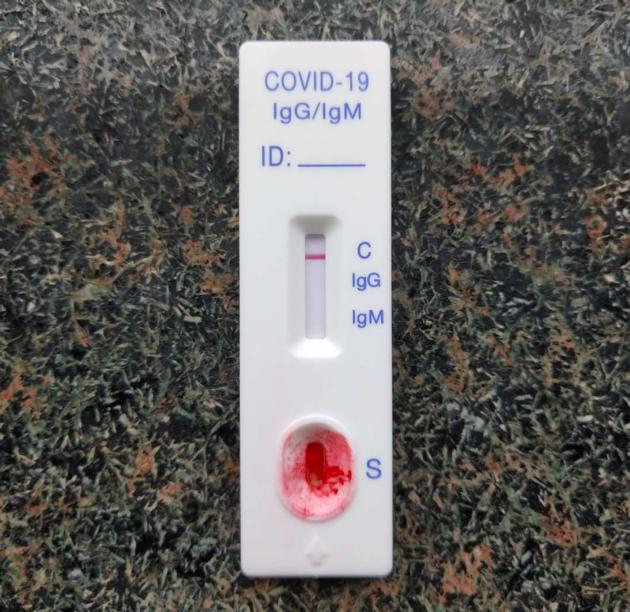
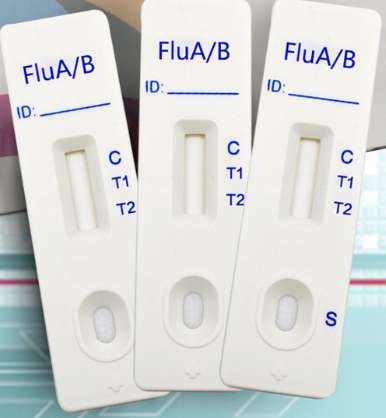
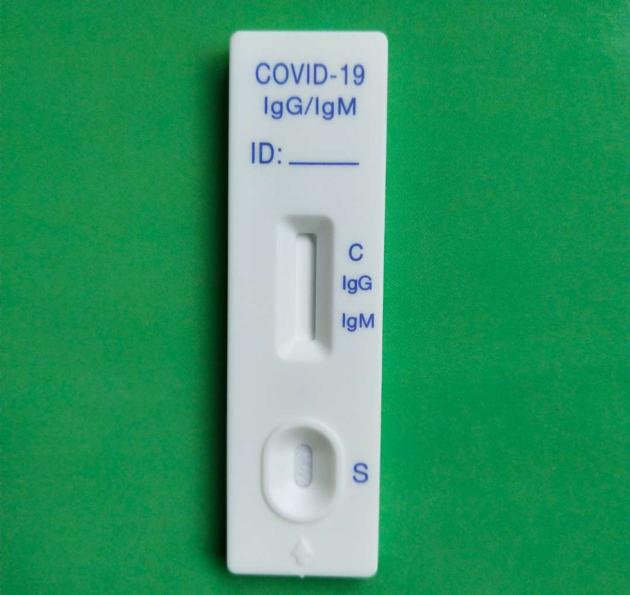
|
SUPPLIER PROFILE
|
|||
|---|---|---|---|
| Company: | Wenzhou Astock Biotechnology Co.,Ltd | ||
| City/State | whenzhou/ouhai, 浙江省 | Country: |
China 
|
| Business Type: | Export - Manufacturer / Trading Company | Established: | 2006 |
| Member Since: | 2020 | Contact Person | zhibin liu |
SUPPLIER PROFILE
City/State/Country -
whenzhou/ouhai, 浙江省
China
Business Type -
Export - Manufacturer / Trading Company
Established -
2006
Member Since -
2020
Contact Person -
zhibin liu