




Advertisements
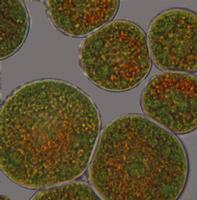


Astaxanthin - Microalga Haematococcus Pluvialis Extract
| Price: | US$ 1~500 / Kilogram |
|---|---|
| Minimum Order: | |
| Payment Terms: | Astaxanthin |
| Port of Export: |
Product Details
| Model No.: | Brand Name: |
|---|
| Certification: | |
|---|---|
| Specification: | N/A |
Packaging & Delivery
| Packaging: | |
|---|---|
| Delivery/Lead Time: | |
| Production Capacity: |
Product Description
What is Astaxanthin?
Because of its unique structure, astaxanthin provides a wide range of antioxidant benefits. Astaxanthin may play a key role in the protection of cell membranes against free radical attack. Although the word astaxanthin may not be commonly encountered in everyday speech, the pigment itself is found in many human foods, and you are quite likely to be consuming it in your diet already. Shrimp, salmon, crawfish, crabs and lobster, are tinted red by accumulated astaxanthin.
Recent studies have indicated that astaxanthin is more powerful than its carotenoid cousin, beta-carotene, at trapping singlet oxygen free radicals.
Astaxanthin is one of a group of natural pigments known as carotenoids. Commercial production of astaxanthin from the microalga Haematococcus pluvialis for its high astaxanthin content. Some other commercial ventures for natural astaxanthin production utilize fermentation of the pink yeast Xanthophyllomyces dendrorhous or extraction of the pigment from by-products of crustacea such as the Antarctic krill (Euphausia superba).
In addition to production from natural sources, astaxanthin may be chemically synthesized, and synthetic astaxanthin is the major form currently being used in fish feeds not suitable for human consume.Astaxanthin has three stereoisomers: 3S,3'S, 3R, 3'S, or 3R,3'R.
There synthesized and extracted from microalga Haematococcus pluvialis can be distinguished by the stereoisomers:
synthetic astaxanthin is produced as free (unesterified) astaxanthin in a mixture of stereoisomers: the stereoisomers (3R,3'R), (3R,3'S) and (3S,3'S) occur in a ratio of 1:2:1
Natural astaxanthin, on the other hand, is usually esterified and predominantly of (3S,3'S) configuration, occurs as the 3S,3'S stereoisomer and primarily as monoesters (>90%), with diesters comprising ~8% and the free molecule ~1%
Thank you for your interest for our products!
If any further questions or need a free sample, please contact with us! Thanks !
Wish you all the best and regards!
Ms Cathy He
Company: Changsha Organic Herb Inc.
Cell:+86-15211185187
Tel:+86-731-82739226
Trade Manager: cn1000310196
Looking forward to hearing from you!
|
SUPPLIER PROFILE
|
|||
|---|---|---|---|
| Company: | Changsha Abotanic Pigment | ||
| City/State | Changsha, Hunan | Country: |
China 
|
| Business Type: | Export - Manufacturer / Trading Company | Established: | 1993 |
| Member Since: | 2011 | Contact Person | Cathy He |
SUPPLIER PROFILE
City/State/Country -
Changsha, Hunan
China
Business Type -
Export - Manufacturer / Trading Company
Established -
1993
Member Since -
2011
Contact Person -
Cathy He